COMMONSIM: Simulating the utopia of COMMONISM (1.1.0)
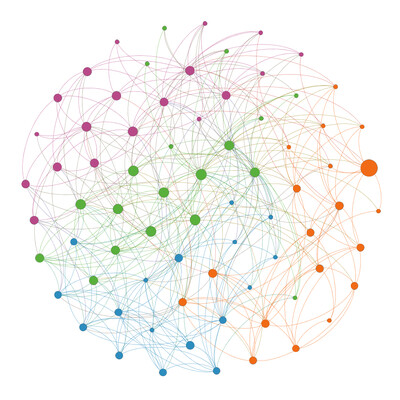
This research article presents an agent-based simulation hereinafter called COMMONSIM. It builds on COMMONISM, i.e. a large-scale commons-based vision for a utopian society. In this society, production and distribution of means are not coordinated via markets, exchange, and money, or a central polity, but via bottom-up signalling and polycentric networks, i.e. ex-ante coordination via needs. Heterogeneous agents care for each other in life groups and produce in different groups care, environmental as well as intermediate and final means to satisfy sensual-vital needs. Productive needs decide on the magnitude of activity in groups for a common interest, e.g. the production of means in a multi-sectoral artificial economy. Agents share cultural traits identified by different behaviour: a propensity for egoism, leisure, environmentalism, and productivity. The narrative of this utopian society follows principles of critical psychology and sociology, complexity and evolution, the theory of commons, and critical political economy. The article presents the utopia and an agent-based study of it, with emphasis on culture-dependent allocation mechanisms and their social and economic implications for agents and groups.
Release Notes
Gerdes Lena, Aigner Ernest, Meretz Stefan, Pahl Hanno, Schlemm Annette, Scholz-Wäckerle Manuel, Schröter Jens and Sutterlütti Simon (forthcoming). COMMONSIM: Simulating the utopia of COMMONISM. Review of Evolutionary Political Economy
Associated Publications
This is a companion discussion topic for the original entry at https://www.comses.net/codebases/37a5f888-0dbd-48dc-ad8a-f03eb84d215e/releases/1.1.0